by Narissa Phelps for the Lennox Wave
Rivers were the highways of the cedar industry and played a huge role in opening up the North Creek (Lennox Head) region in its earlies days. Richard Hughes, who was born in Ireland about 1818 and arrived in Australia about 1830, was a boatman but also a timber cutter, boat builder, farmer and police constable. He arrived in the North Creek area in the late 1850s, one of the region’s early settlers.
Richard operated ferries along the North Creek. Without boats, cedar-cutters could not move upriver to work, timber could not be brought to market, supplies could not be obtained, farming areas could not be opened up and towns and villages could not develop. Until roads and bridges were built, everyone depended on the rivers and their boatmen. Life moved with the tide, and North Creek at that time was a medley of rafts, pulling boats, barges, schooners and steamers. By the time Richard arrived, life on the river was changing. As settlement spread, the river became busier, serving the increasing needs of settlers and workers. This was also a time of increased tensions between First Peoples and dispossessors, with raids conducted on Bundjalung families camped on the north side of North Creek.
Richard Hughes had married Elizabeth Horseman in 1843, prior to moving north. Their arrival in the district was marked in 1857 with the birth of their sixth child, christened Marion Richmond Hughes, a tribute to the family’s new home. In 1961, Richard purchased a small town block in the infant township of Ballina, but North Creek was to be the family’s home, and North Creek provided his livelihood. By 1885 he owned 40-acres and three horses. The Hughes family quickly became part of the fabric of this region, his second daughter, Marietta marrying David Sharpe of Sharpe’s Beach. Richard died in 1894, aged 76, and was buried in the Ballina Pioneer Cemetery

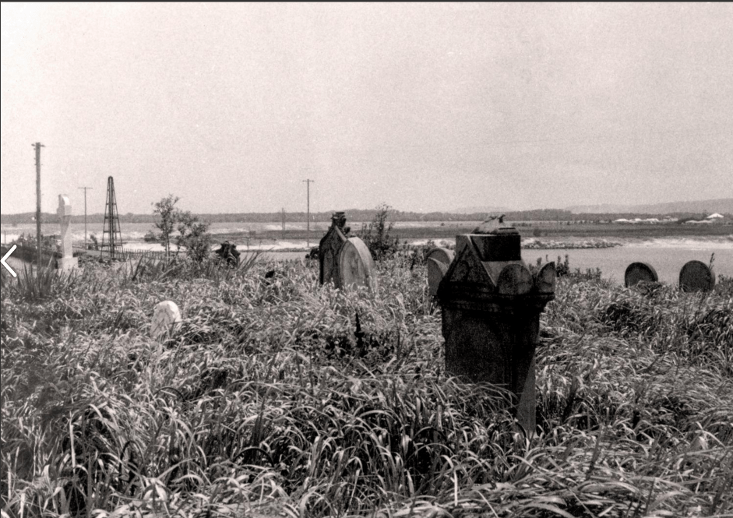
Ballina Pioneer Cemetery, where Richard was buried in 1794. This photo is before the cemetery’s dismantling whereby headstones were placed in the Pioneer Wall. Image courtesy of Richmond River Historical Society.


 Colonial Australia's Early History
Leave a comment