By Dianne Wiggins and Narissa Phelps for the Lennox Wave
In the early 1860s, aged just nine, William Coleman arrived in the northern rivers with his parents, John and Catherine Coleman. He had spent his childhood near Gosford helping his father and older brothers, who were timber-cutters.
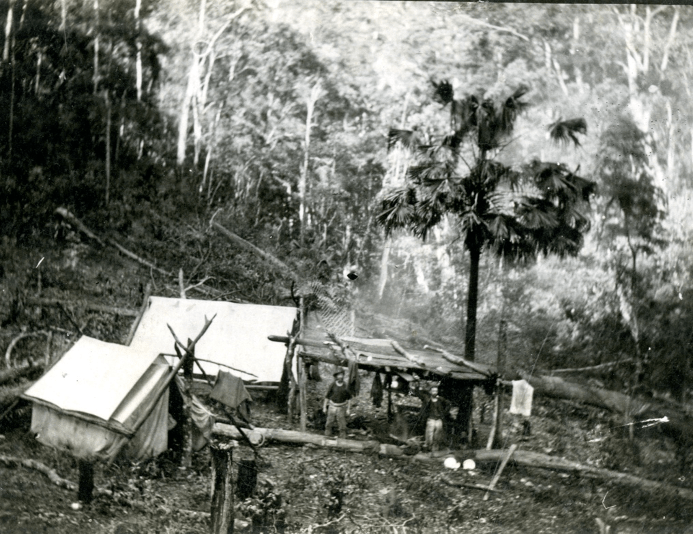
John, an emancipated convict, worked for Charles Jarrett at Emigrant Creek, where he and the family lived in the timber camp and spent time on the rafts which transported cedar downstream to the schooners. In adulthood, William continued working for Jarrett, the most respected of the sawyers, throughout the latter decades of the 1800s, working the timber as far up as the Brunswick.
Living and working in the ‘Big Scrub’ was demanding and it was not until 1881, when he was nearly 27 years old, that William married Elizabeth King (nee Gray), a widow with 7 children. Elizabeth had inherited her husband’s (Robert King) farm at North Creek, so William became not only a husband and step-father but also a farmer. His brothers John Junr. and Charles Coleman also had farms in the district, all working initially with sugar cane and then, in the early 1900s, transitioning to dairy farming. Their herds provided cream to Norco for butter production.
Besides Elizabeth’s 7 children by Robert King, William and Elizabeth had 4 children of their own – Ethel May (born 1882); William Joseph (born 1884); Maud (born 1886); and Thomas Herbert (born 1891). Sadly, William lost both his sons, leaving no-one to carry on his name, or legacy. Thomas died from measles as an infant, and William Joseph died fighting in Palestine during the first World War.
William died on 19 July 1935, just two days short of his 81st birthday. He survived Elizabeth by 15 years, living out his days on the farm at North Creek with his daughter Maud and her husband, George Myers.

Timber-cutters’ camp. Photo courtesy of RRHS Timber & Timber Getters 85.
For further information on the Coleman family see: From Brighton to Ballina – No Fair Play: the story of John Coleman, by Dianne Wiggins and Joan Ransom.


 Colonial Australia's Early History
Leave a comment